TANZANIA FACTS:
Capital city and administrative capital: Dodoma
Commercial capital: Dar-es-Salaam
Official languages: Kiswahili and English
Time: GMT + 3
Currency: Tanzanian Shilling (Tsh or TZS).Credit cards (MasterCard, Visa, Eurocard ) are accepted in a few larger hotels and restaurants. Traveler’s checks/Cheque should be in US Dollars.
Where credit cards are accepted, the payments will normally be recorded in US Dollars, regardless of the card’s default currency
It is very important to note that Tanzania is largely a ‘cash economy’. Malaika advise that you do not rely on being able to use your credit or debit card, but plan on the assumption that you will need to use cash for almost everything (souvenirs and other purchases, drinks at a bar, etc.).
Banks and Forex (foreign currency exchange) bureaux are available at airports and in all major towns.
CLIMATE
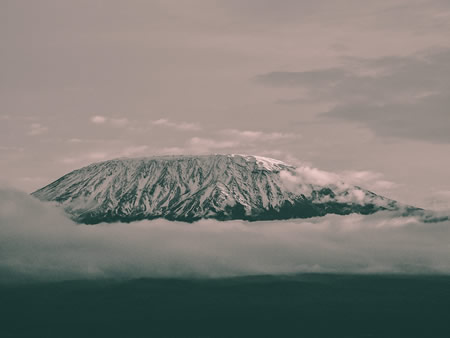
Tanzania’s climate is predominantly tropical. For the whole country, the hottest months are from October to February. The so-called long rains are from mid-March to late May, and the ‘short rains’ from November to January. This is not to say that you should expect constant rains during the rainy seasons. The usual pattern is that heavy downpours are followed by dry spells. From March to May the rains can be very heavy storm-like downpours, and there can be some flash-flooding. The coolest months are June to August when the nights and early mornings can be relatively cold, though rarely below 50 degrees F (12 C). However, in high-altitude areas such as Mount Kilimanjaro and Mount Meru, the temperature can fall below freezing. Coastal areas are usually hot and fairly humid with an average daytime temperature of around 86 F (30 C). Sea breezes make the climate very pleasant from June to September.
ENTRY REQUIREMENTS
A valid passport with at least 6 months’ validity remaining at the time of arrival and at least 3 completely un-used/unstamped pages remaining and a valid visa for those not exempted (US$ 50 per person per single entry visa or US$ 100 for multiple entry, valid for 3 months. US Citizens are required to obtain a multiple entry visa, even if they do not intend to leave Tanzania and re-enter the country during their trip). Please make sure to retain your boarding pass as you may be asked for this at customs after you have disembarked the aircraft
Travelers who do not have the required minimum 3 blank pages in their passport may be denied boarding at the point of departure. If you are traveling to both Tanzania and Kenya and obtain your visa at the on arrival at the airport and/or border you should have at least 4 blank pages in your passport. Please note that ‘AMENDMENTS’ and ‘ENDORSEMENTS’ pages do not count as blank pages.
We advise visitors to apply visa through an on-line application process to avoid delays and inconvenience on arrival
Please see the following link for a step-by-step instructions and guidance for completing the online application: https://www.ivisa.com/tanzania-visa
HEALTH
Yellow Fever vaccination certificates are NOT needed for visitors arriving directly Europe, The United States, Canada, Japan and other countries where Yellow Fever is not endemic.
Visitors originating from or transiting through countries where yellow fever is endemic need to have valid Yellow Fever vaccination certificates (or a doctor’s/ physicians certificate stating the health reasons why the vaccine could not be given.
Visitors who have passed through an Endemic Yellow Fever zone(s) immediately prior to coming into Tanzania are required to show a valid yellow fever certificate on their arrival in Tanzania. Otherwise they will require to be vaccinated at the entry point of arrival in Tanzania. There are vaccination facilities at the international airports and main overland border crossings, but Malaika strongly recommends that travelers get vaccinated before departure from home, if they come from, or are likely to pass through, a country where yellow fever is endemic
All guests/visitors travelling from the Tanzania mainland to Zanzibar will not be required to show their yellow fever vaccination certificate as Zanzibar is inside the United Republic of Tanzania. However, if you are flying directly to Zanzibar, the requirements will be the same as if your first point of entry is within Tanzania’s mainland.
We also recommend you speak to your doctor/physician about the possible need for a Hepatitis A and / or Tetanus booster and about his/her recommendations concerning Hepatitis B and Typhoid, and any other vaccines.
Whether or not you are taking antimalarial drugs, it is important to protect yourself from mosquito bites from dusk till dawn. This is when the type of mosquito whose bite transmits malaria is most active. Precautionary measures include using tropical strength DEET-based insect repellent and covering up before dusk and wearing long sleeved shirts, trousers, socks and shoes in the evenings. You may also wish to use permethrin treated clothing and gear such as shoes, pants, socks and shirts. You can buy pre-treated clothing and gear with permethrin or treat them at home. Treated clothing remains protective after multiple washings. Permethrin should not be used directly on skin. You should cover up and use insect repellent before going to dinner each evening. Pay particular attention to your ankles and legs as mosquitoes, if present, are more likely to hover at ankle level.
For a detailed discussion on malaria including the different antimalarial drugs available and ways to prevent mosquito bites, please visit: www.cdc.gov/travel/diseases/malaria or https://www.fitfortravel.nhs.uk/destinations/africa/united-republic-of-tanzania#Immunisations
Camps do not have medical facilities, nor do drivers, guides and camp/lodge personnel have any medical training beyond basic first-aid. Moreover, pharmacies outside the major cities only stock a very limited range of basic medicines. We therefore strongly urge that if you take regular medication you bring an adequate supply with you.
Going on safari need not be strenuous, but it does require that you be in generally good health. All guests must understand that while a high level of fitness is not required, a measure of physical activity is involved in all African safaris. It is essential that anyone with a medical problem/condition, allergy, disability, or special dietary need discusses this with us at an early stage, and makes known to us immediately any condition/illness which may have occurred after booking the safari.
Travel and particularly any physical activity like trekking long distances or climbing involves certain risks and inherent dangers. We therefore advise that you consult your doctor/physician for advice, particularly if you have any concerns owing to chronic illness, heart disease, a physical handicap, mental illness or if you are pregnant. Your medical practitioner might advise that you should avoid certain activities, or high altitudes. Bear in mind that parts of a safari and climbs can be physically demanding with driving over dirty, dusty and rough roads, and high altitudes of almost 6000 meters. Do please inform us in writing of any issues and/or medical advice at the time of the reservation. As mentioned above, going on safari need not be particularly strenuous, but certain options (such as climbing the Kilimanjaro, or Mount Meru) are not for everyone. We at Malaika discuss with you itineraries and options which take account of any medical advice you have received. However, each person has their own approach to the risks which they are ready to take; we can only help you within the limits of our experience, which does not include formal medical knowledge.
The possible risk factors and inherent dangers arise from, amongst other things, hiking and mountain climbing (i.e. falling stones, rock slides, etc.), equipment failure, walking safaris, trail obstructions, and on all safaris danger from wild animals.
Evacuation from remote locations can be difficult in case of a medical emergency and inaccessibility to appropriate local medical care. Make sure your insurance is aware what kind of tour you are going to undertake. By sending the deposit each passenger, named on the booking form, certifies that they do not have any physical or other medical conditions that would interrupt the tour
INSURANCE
Malaika Safaris strongly recommend that you buy comprehensive travel insurance, which should of course include medical cover as well as cancellation cover. We also recommend that before you travel you subscribe AMREF’s Flying Doctors medical insurance which costs US $50 per person. Temporary AMREF Flying Doctors membership is available to cover air evacuation to Nairobi, where there are excellent medical facilities, including the AKU University Hospital. The fees are: US $5 for air ambulance cover for Tanzania, Zanzibar and Kenya (AREA 1) for a period of up to 30 days.