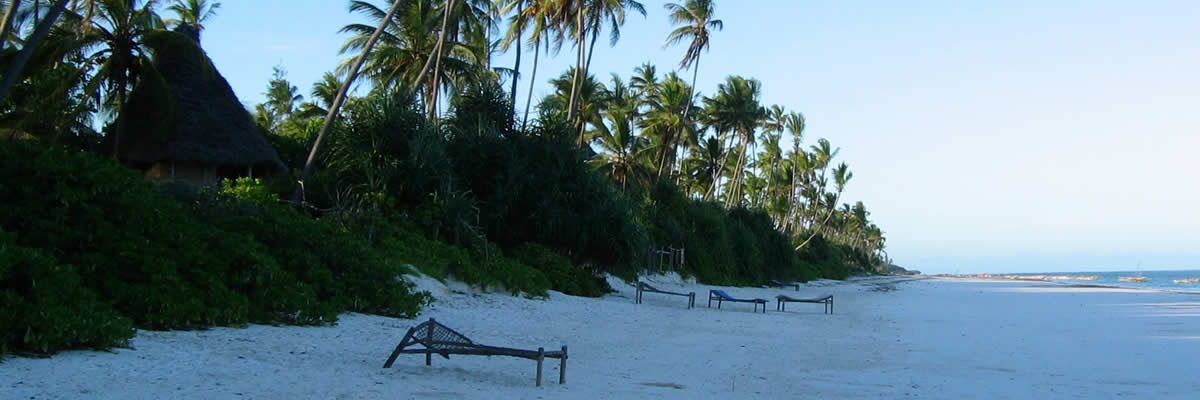
Pangani is a great for place for a perfectly relaxing beach experience. Pangani is located some 470 km (292 miles) south-east of Arusha. The journey from Arusha takes you through Moshi, Same, Segera and finally to the mouth of the Pangani river. A brand new ferry will take you across to Pangani town.
Pangani is a ‘Swahili Coast’ town; archaeologists have found evidence of settlements dating back to the 15th century. However its importance as a major trading hub came about in the 19th century when Pangani was a terminus for the trade caravan routes, especially the selling of slaves coming from the interior of the then Tanganyika and beyond. As the slave trade stopped, Pangani soon became the administrative centre for the German rule and eventually fell into British administration following the defeat of Germany in World War II. Even today, it is still possible to see the old buildings and ‘bomas’ that once stood strong under the various powers.
Today, almost a century later, Pangani has little changed and therefore offers a visitor to Tanzania an unforgettable experience that cannot be found anywhere else in East Africa. It is for this reason, and because it not over-visited, that it can be hugely enjoyed by visitors who go back with memories of a special place and bygone era.
Secrets revealed: Pangani has it all, from the Swahili Coast’s rich history and culture, to pristine and palm-fringed beaches, deep-sea fishing plus a marine reserve.
In 2003 local fishermen accidentally caught a fish called “Coelacanth”, which is referred to as a “living fossil”. This type of fish is thought to pre-date dinosaurs by over 300 million years! Due to the fact that this fish is only found in small numbers off South Africa and Indonesia, it is classified as a critically endangered species. As a result of this discovery, the government of Tanzania in 2009 declared a large area north of Pangani to be a marine reserve to protect this rare fish. The reserve includes South Head & Tongoni Reef, plus the Karange and Yambe Islands.