
FAQs
Tanzania is home to the great migration wildebeest and has more national parks than any other African county, including two of the most famous wildlife parks in the world which are Ngorongoro Crater and Serengeti National Park.
Ngororongoro National Park was formed when a very large volcano erupted and collapsed on itself. It is home to the ‘big 5’ game (elephant, lion, leopard, buffalo, rhino). Huge herds of wildebeest and zebras traverse its plains during their annual migration.
Serengeti National park has the great migration of wildebeest in search of grasslands. Tourists from all over the world gather to witness this extraordinary annual migration; this is probably the greatest and most spectacular natural wildlife events in the world. The best time to visit the Serengeti for wildlife viewing is between December and June. The months from March to May constitute the wet season, with millions of wildebeest and zebra migrating annually sometime in May or early June.
One shouldn’t finish a holiday in Tanzania without visiting the fantastic beaches in Zanzibar and Pemba. These are perfect places for relaxing, a honeymoon or romantic getaway, snorkelling and exploring the rich biodiversity. These islands boast of some of the best beaches on the planet. In addition, the fascinating and charming Stone Town is located right in the heart of Zanzibar, which features historical Arabian townhouses, narrow alleyways, and a busy port.
Adventurous and physically fit travellers can also go on a climb of Mount Kilimanjaro, Africa’s highest mountain. Classed a World Heritage Site, the best time to go to Kilimanjaro is between late June and October.
Malaika Safaris strongly recommend that you buy comprehensive travel insurance, which should of course include medical cover. We also recommend that before you travel you subscribe AMREF’s Flying Doctors medical insurance which costs US $50 per person. Temporary AMREF Flying Doctors membership is available to cover air evacuation to Nairobi, where there are excellent medical facilities, including the AKU University Hospital. The fees are: US $5 for air ambulance cover for Tanzania, Zanzibar and Kenya (AREA 1) for a period of up to 30 days
There isn’t one single answer to this question. There are lots of interesting things to see all year round. So it all depends on what you want to see and do, as well as of course when you are able to travel. Your budget and the climate are also important factors.
When you know what you want to see, Malaika Safari will advise you on the best time of the year based on your preferences. The most spectacular part of the famous ‘Great Migration’ of zebra and wildebeest takes place from June to August in the Serengeti. June to September is the drier and cooler season; the high season is the best time for wildlife viewing. However accommodation is in high demand during the peak season and prices are therefore higher. Between June and October animals are more easily spotted. First, because the vegetation is shorter and many shrubs and trees have dropped their leaves; second because animals, such as elephants, go towards permanent water sources. However no big herds can be seen around this time because the grass is much shorter. The lower season is November to May. This period includes the short and long rainy seasons (the long rains being around March - April). There are fewer visitors and accommodation and game drives are less expensive. During this season, the views are spectacular and almost everything has become lush and green. February is the calving season for wildebeest. Predators (lions, leopards, hyena, and African wild dogs) often follow the wildebeests’ path.
There is a lot on offer in both the high and low seasons and whether the weather is consistently dry or sunny, or in March and April when the warm days are interspersed with heavy downpours. Throughout the year you can really enjoy what East Africa’s fantastic nature has to offer.
Each national park offers a unique range of activities: game drives, walking safaris, air balloon trips, and night game drives. Activities vary depending on which national parks you visit, and whether your safari includes a few days on the beach, camping, or a balloon safari. Enjoy the great migration, the ‘big five’, animal-watching, birding, unforgettable cultural experiences, or climbing Mount Kilimanjaro. There are also unique beaches to relax or go snorkelling or diving in the wonderful Indian Ocean; experience the amazing architecture and history of Stone town. Malaika Safaris can also offer an opportunity to learn about the lives and issues which affect people, their children and their communities, through visits or participation in Social Impact tours such as those organised by the Small Things foundation, a children’s and families’ charity which Malaika Safaris supports.
A safari with Malaika Safaris enables you to discover areas of Africa’s unique wilderness, wildlife, landscapes and culture with a trained local guide and a great 4X4 vehicle. You can get unparalleled views of the Great Wildebeest Migration and the famous Big 5. Enjoy game drives and a range of optional activities, which depend on which camp you’re staying. Accommodation is normally full board, except that when you are on a game drive you will be provided with a pack lunch/lunchbox as you would not return to the lodge at lunchtime.
Malaika offers tailored safaris, based on what you want to see, what time you wish to visit, your budget, whether you’re looking for something active, romantic, with family and friends, private, or a solo safari. We listen, help and guide you. We want you to have a magical experience, and make sure your safari is unique and meaningful, inspiring and fun. We believe that a safari is not only about wildlife but also an opportunity to interact with local communities. Malaika can also give you an opportunity of seeing the positive impact of your custom on vulnerable families, orphans and sustainable environmental programs.
Malaika Safaris also offers guests the opportunity to combine an authentic bush safari with an idyllic island escape in Zanzibar or on the Tanzania mainland’s beautiful beaches.
No two days are the same. A day on safari has got its own flow, depending on where you’re staying, the weather, and the time of day you set off. The best and most rewarding times on game drives are the early cooler morning and in the afternoon when the animals are most active. In the hotter times of the year this also enables you to relax at the camp during the hottest part of the day.
If you want to be on safari all day and have picnic lunch, this is possible. Many visitors like to spend the whole day out and there is no limit to the amount of time you can be out on safari – and there is no end to what you can see and discover. However on some days you might prefer to take it easy, do a game drive in the morning and come back to the lodge in the afternoon for lunch, and spend the evening around a campfire under starry African sky with the sound of lions roaring in the distance.
Meals are the only thing that requires a little forward planning, just so that they fit in with the game drives and other activities you wish to do that day. There is a great amount of flexibility: breakfast can be arranged at almost any time to suit you. For instance you can choose to have breakfast early and go on a game drive, or set off on an early morning game drive and come back for a later breakfast around 9 am or later. Likewise lunchtime (and place) is flexible. You can come back to the lodge or camp or stop for a picnic lunch during the game drive. Your guide will make some suggestions based on experience but the choice is yours.
Your guide might tell you for instance that the migration is passing very near the camp, and its
not far to drive to see it. On the other hand your guide could let you know that there is a special group of animals, lions perhaps, which are much further and involve a long drive to observe; in that case a picnic lunch would be a good option. We recommend spending a little time with your guide each evening to plan your activities and meals for the next day.
Safaris are an outdoor experience and in common with any outdoor experience there are some inherent risks. Camps have safety procedures which aim to prevent accidents and respond to any emergency which might arise. On game drives national park rules generally forbid guests from leaving the vehicles. Camps and lodges have security staff that keep a lookout, and ensure that animals are kept out of the camp area. Almost all camps are un-fenced which allows a greater sense of connection with the surrounding nature, but requires guests to follow the camps’ safety protocols.
Family safaris are a great and meaningful experience for the whole family; a wonderful time to further strengthen bonds through shared experiences and spending time of unique quality together. Under beautiful African skies you and your children can experience memorable wildlife sightings, culture, and learn more about nature.
Some camps do not accommodate children under the age of 5, so if you are thinking of going on safari with young children we invite you to discuss this with us early in your planning. Some camps also offer activities for children.
You can start a new life together, celebrate a special anniversary, or just have an amazing romantic experience in memorable settings. Whether you want to get away from it all, or have a great adventure, or just completely unwind and relax, Malaika Safaris can organise and help you plan a dream safari. You might choose for example a few days in the Serengeti followed by time in wonderful Zanzibar, or in an exotic Indian Ocean island. Enjoy amazing landscapes, and sunset cocktails with your loved one. Whatever you are dreaming of seeing and doing do please talk with us; we will love to organise a very special and memorable safari for you.
The weather has an influence on your safari in term of what you will see, and in terms of cost. Around June to October is the best period if you would like to see the interaction of predators and prey. It is also a good time for large cats, as the grass is short (June to October being the dryer and cooler time of year). Because there is less water, animals hang around permanent water sources, risking taking a sip while watching out for predators. You can also see elephants searching for water.
From late October to early January there are showers, mainly at night, and the countryside soon loses its parched and ochre look to become rapidly beautifully lush and green. This is the calving season, especially for wildebeest. Predators come out in force, following herds and preying on the vulnerable new-borns. June is the time to see the most spectacular part of the ‘great migration’ of wildebeest and zebra.
December and January are normally the hottest months, with the coolest being June to August. As Tanzania is only just south of the equator there aren’t four defined seasons as in the United States, Europe or Canada. Nor are there any big differences in daylight hours between December and June. Sunrise is on average at around 6.30 am and sunset at 6.30 pm.
A really great safari experience can be had at any time of year, though it’s worth noting that seasonality impacts on the cost of your safari. Whichever season you choose to travel in, camps and lodges are well equipped.
You will go into the wilderness with your trained and knowledgeable guide in a specially adapted Land Cruiser type vehicle. Depending on what you wish to see, and what your guide advises in terms of the location of animals and viewpoints, you can choose to have lunch at the camp or lodge, or stop for a picnic lunch in the amazing wilderness.
Depending on your preferences, budget, and group size game drives can either be as part of a group of no more than six guests, or a private safari – where the vehicle is only for you. Whether you choose a private safari or not, you will have a window seat in the vehicle. Budget aside, some guests like to enjoy the experience of a game drive with a few other visitors, whilst others prefer the having the experience of a private safari. The choice really is yours.
Not all the camps have Wi-Fi; where it is available it can sometimes be a little bit slow
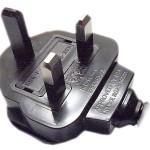 Electricity is available at 220/240 volts AC, 50 Hz. The wall sockets are the British type (see picture). Adaptor plugs will be available in some lodges but we recommend that you bring one with you, especially as it’s rare to find USB charging points in hotels or lodges.
Please be aware that the power supply is subject to cuts/outages and voltage fluctuations, even in major cities!
On safari, most of the lodges are powered by generators or solar panels. Generators are often turned off during parts of the day and night to save fuel and minimise noise. Also, in many camps and lodges, power sockets for charging are only available in the main areas.
Electricity is available at 220/240 volts AC, 50 Hz. The wall sockets are the British type (see picture). Adaptor plugs will be available in some lodges but we recommend that you bring one with you, especially as it’s rare to find USB charging points in hotels or lodges.
Please be aware that the power supply is subject to cuts/outages and voltage fluctuations, even in major cities!
On safari, most of the lodges are powered by generators or solar panels. Generators are often turned off during parts of the day and night to save fuel and minimise noise. Also, in many camps and lodges, power sockets for charging are only available in the main areas.
Shampoo, shower gel, hand wash soap, and body lotion are provided in some of lodges and camps. However, hairdryers are only available at limited camps; this is because, in the bush, electricity is a scarce resource and is supplied largely from solar power and generators, so not all of the camps’ power supplies are sufficient for hairdryers.
There are budget camps, tourist/standard class camps and lodges and luxury camps and lodges. Tourist and luxury camps offer a standard of accommodation comparable to that which you might find back home, with the exception of air-conditioning which, because of the shortage of available power is only usually available in hotels in and near cities. Luxury tents in luxury camps, while they are technically tents, have all the amenities you would expect to find in a hotel bedroom, such as chairs and/or sofa, a writing desk, fully equipped bathroom, as well as of course a large and comfortable bed. Don’t imagine therefore that a safari has to involve ‘roughing it’. You will spend some time in a 4x4 along bumpy tracks through the bush but relax in comfort back at the camp or lodge, with the wide African horizons and skies around you. Doze off and dream with the distant sound of animals in the background, and wake up to another inspiring and exciting day of discoveries.
Gratuities are not automatically expected and tipping is therefore completely at your own discretion. Our suggestion is to consider tipping your guide between $ 5 and $ 20 or equivalent per person (depending on group size) and the camp staff between $ 5 and $ 10 per traveller per day. You can tip your guide in person and the camp staff collectively using the tip box found in the reception area in most camp. Tips can be in any currency. Different people from different parts of the world approach tipping in different ways; in some countries tipping is almost an exception whereas in others it is very much expected; you need not feel under any pressure or obligation to tip more than you’re comfortable with.
We advise you visit your travel clinic or doctor/physician, for advice on prophylactics. Whatever prophylactics your doctor may prescribe, it is important to take precautions to avoid being bitten. Use insect repellent, cover up before dusk and wear long sleeved shirts, trousers, socks and shoes in the evenings. Light neutral coloured clothing is best.
We also recommend you speak to your doctor/physician about the possible need for a Hepatitis A and / or Tetanus booster and about his/her recommendations concerning Hepatitis B and Typhoid, and any other vaccines. .
For a detailed discussion on Malaria including the different antimalarial drugs available and ways to prevent mosquito bites, please visit: https://wwwnc.cdc.gov/travel/diseases/malaria or https://www.fitfortravel.nhs.uk/destinations/africa/united-republic-of-tanzania#Immunisations
It is the largest animal migration in the world. Every year, more than 2 million animals (wildebeest, zebra, and gazelle) migrate in a clockwise direction across the plains of the Serengeti in Tanzania and the Maasai Mara in Kenya. During the various parts of the migration the animals have to cross crocodile-infested rivers, are hunted by predators, and face natural disasters such as droughts and flooding. This is a daily struggle for survival.
Towards the end of each year the wildebeest arrive on the short grass plains of the Serengeti. They stay in this area during January, February (when most of the calves are born) and March. The migration itself begins in April, when the animals start moving to the northern part of the Serengeti in search of fresh grazing and water. Around June the wildebeest migration often stops for a short time on the south side of the Grumeti River, which slows the animals’ migration further north. The migration continues moving northwards during July and August. Then, in September, the herds spread across the northern Serengeti. There, the Mara River has to be crossed; it gushes through the northern Serengeti from Kenya’s Maasai Mara. Watching the herds of wildebeest crossing the Mara River can be very spectacular. It's not uncommon to see wildebeest cross the river going north on one day, and then cross back south a few days later.
By October the wildebeest herds are migrating again, but this time going south, arriving at the end of the year back to the area in which the migration started the previous year. The animals broadly follow the same migratory route every year, with some occasional variations due to weather conditions.
The migration can therefore be seen at almost any time of the year, though to see the particularly spectacular movement of herds across the Grumeti or Mara rivers, you should plan to travel in June or September.
Unless you’re planning an extended trip, Tanzania’s national parks have so much to offer, you can have a complete and fascinating experience without needing to add Kenya to your trip. Indeed, such is the scale, number and diversity of Tanzania’s national parks that an extended safari or return trip would not exhaust the opportunity for discovery, adventure, learning and further inspiration.
The opportunities for you to explore and make new exciting discoveries are almost endless.
Malaika Safaris will provide you with the best possible advice, tailored to your particular wishes, needs, and budget. We know the country, its customs, and speak its language. We are here to answer your questions and plan a great safari. We will guide you but are led by you; please get in touch and we’ll get right back to you.
Definitely – Zanzibar is a great addition to any safari itinerary or even just as an idyllic escape and destination on its own. There are really great beaches, and the island has a fascinating history and distinctive culture.
Yes you can book your trip directly with us. We welcome you to speak with us through one of the contacts provided on this website; when you do so one of the partners will get back to you quickly. We don’t operate a call centre; you will communicate directly with, and get personal attention, from one of the owners. We will answer your questions and ask you for all the information needed to make sure we understand your needs and wishes, and tailor-design the ideal itinerary to suit your timescales and budget. We are here to help you have the safari of your dreams, the one that’s right for you.
There is no ‘official religion’ in Tanzania. For historical reasons which go back to trade, colonisation and immigration, there are people from all the world’s major religions in the country.
If you have time and wish to attend Church, you will find a warm welcome in churches of different denominations, whether Catholic, Lutheran, Presbyterian, Anglican, and Pentecostal. However, almost all services will be in the local language, Kiswahili. There are few services in English.
There are also Hindu and Sikh temples (mainly in the cities) and mosques. There are however currently no synagogues in Tanzania.
If you have any questions, do please contact us and we will get back to you, and discuss any concerns which you might have.
Certain vaccinations may be required for travel to Tanzania. For example, you will need a yellow fever vaccination certificate if you live in, or have spent time in, a country where yellow fever is endemic immediately prior to your safari. Visitors arriving directly into Tanzania from, say, Europe, the United States, Canada/Quebec, Japan and other non-yellow fever areas are not required to produce vaccination certificates to gain entry. We recommend however that you consult your local Travel Clinic or doctor/physician at least two months’ prior to travelling, and obtain the latest health travel advisories.
A visa is required for most travellers. The main exceptions are a number of other African countries and a few countries in the Caribbean. A list of the countries whose citizens do not require a visa can be found here https://www.immigration.go.tz/index.php/en/services/visa-information . Single entry visas valid for 3 months cost US$ 50 per person. It is essential to notes that your passport must have a minimum of 6 months’ remaining validity at the time of entering Tanzania, and at least 3 unused /non-stamped pages remaining. Visas can be purchased upon arrival at the immigration desk, or online. Malaika Safaris recommend that you obtain a visa on-line as there can be long lines/queues at the airport and after a long flight you’ll want to stand in line for the shortest possible time.
Please see the following link for a step-by-step instructions and guidance for completing the online application:
You can begin the process with this link : https://www.ivisa.com/tanzania-visa
When it comes to payment, there are a number of payment methods available. Credit card, wiring funds, or cheque/check (subject to time for clearing) are all possible.
We can plan a safari for you matched to your physical and other abilities, and your special dietary and other needs. There are a very few exceptions and we recommend that you discuss any special needs with us at the outset, so that we can advise you and together plan accordingly. If you have impaired mobility, you can still enjoy a safari; it just means that more careful and prior planning is needed.
Shorts, lightweight trousers, short and long-sleeved shirts in neutral, preferably bush colours. Sweater or fleece during the colder months. Swimsuit/sarong, comfortable lightweight walking shoes or boots, sun hat and sunglasses, high factor sun lotion, tropical insect repellent, camera (of course) plus plenty of memory cards (or film if you plan to use film), binoculars. During the dryer parts of the year some national parks can be dusty. The Serengeti can be dusty all year round because of the shallow soil. We recommend that you pack a bandana, or even a mask, if you are sensitive to dust, bring lens caps for your photography and video equipment, and a bag in which to keep the equipment when not in use.
There is a luggage allowance of 15 kg (33 lbs) on all shared charter flights to and from the camps. There isn’t the option to pay for excess luggage; an additional seat would need to be bought.
The island of Zanzibar and the beach resorts on the mainland are predominantly Muslim, so recognition of traditional courtesies is important. Clothing such as swimwear or brief shorts is regarded as unacceptable in town and villages away from the main tourist resorts.
All laundry in camps is done by hand and dried outdoors, and the turnaround time is therefore dependent on the weather. The local custom is that people wash their own underwear, so please do bear this in mind.
Unless you have special needs (such as allergies) or strong preferences, there is no need to pack shampoo, body wash, or lotion – these are will be available for you at the camps/lodges.
We are committed to fairness in our dealings with our clients, partners, and everyone in the supply chain. We are also passionate about conservation and supporting the community in a tangible way. We are particularly proud to support a children’s and family charity based in Nkoaranga, just outside Arusha. For details please see our Corporate Social Responsibility page by clicking here.