Ngorongoro Conservation Area
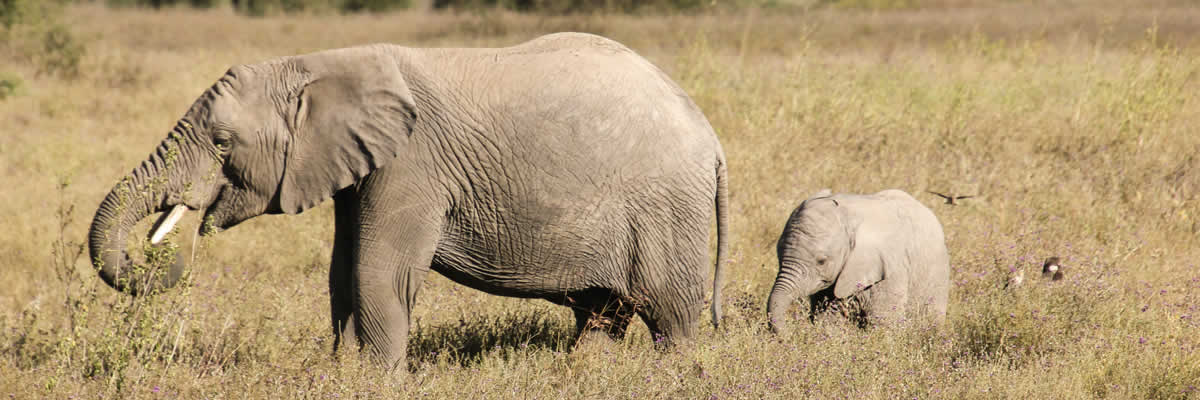
UNESCO World Heritage Site since 1979. Ngorongoro Conservation Area (commonly known as the Ngorongoro Crater) home to the world’s largest caldera and is the birthplace of the wildebeest. Your first glimpse of the stunning Ngorongoro will likely come from the heavily forested viewpoint that looks down upon its sun-drenched, cloud dappled magnificence. Ringed on all sides by tropical forest-draped walls of the caldera, Ngorongoro has an almost mythical quality. One of the best places in the country to see the endangered black rhinoceros, the park is home to the entirety of the big five and is a particularly good place to see lions and cape buffalo all-year round.
Ndutu, which is located in Ngorongoro conservation area, is renowned as the birthplace of the wildebeest. It is where these animals linger to calve during their great migration so that the mothers can feed on the rich grass of this volcanic area. This takes place once a year from January to March.
The verdancy of the park means that animals can be seen here year round, although a large number of them participate in the Great Wildebeest Migration as the huge herds move north to the distant Maasai Mara in Kenya. As you wind your way down into the vast bowl of the collapsed caldera, you’re immediately able to see herds of buffalo, wildebeest, gazelles, and zebra moving about apparently unphased by the stalking hyenas, the prowling lions, and the opportunistic jackals.
In the great alkaline Makat Lake, a vast flock of colourful flamingos can be seen, while at the Ngorongoro Picnic Area you can observe deceptively peaceful hippos while eating your lunch. On the fringes of the crater, where the forest hugs the steep walls, leopards and black rhino can occasionally be seen moving through the undergrowth. Playful baboons can also be seen going about their foraging all day long.
See the fossilized footprints that reveal where our earliest ancestors first walked upright, and a host of discoveries vital to our understanding of our evolution, as you enjoy the beauty of this age-old landscape. Known as the Cradle of Mankind, the Oldupai Gorge in the eastern Serengeti is an important archaeological site where early evidence of Palaeolithic man was discovered in the 1930’s.
Another fascinating aspect of the crater is that it is home to a large pastoralist community. The Masaai have co-existed side by side with wildlife in harmony for centuries. You can also explore nearby landmarks such as Olmoti Crater, Empakaai Crater, Lake Ndutu, and the Ol Doinyo Lengai.